
Triage: today pt began to develop severe lower right flank pain radiating to abdomen, cramping sensation. C/o N/ V. Denies diarrhea, fever, bloody emesis, or SOB.
History of Present Illness: A woman in her early 50’s presents with moderate to severe right flank pain that started around 3:00 AM associated with a couple episodes of non-bloody vomiting and radiation to her groin as well as urinary urgency. She denies fever, chills, leg symptoms, weakness, worsening with activity, blood in vomit or other complaints. No history of kidney stones
Vital Signs:
T: 36.8 °C, HR: 89, RR: 16, BP: 153/98, SpO2: 100%
Physical Exam: normal except for right CVA tenderness
Initial Diagnostic Testing:
- UA: 24 rbc, 0 wbc
- CBC/Chem: normal
- Imaging: see US below.
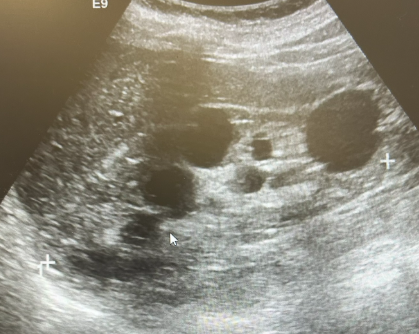
What is the most likely diagnosis?
- A) Kidney stone
- B) Renal abscess
- C) PCKD
- D) None of the above
SCROLL DOWN FOR ANSWERS & 1-MINUTE CONSULT
<<<<<<<<<<<<<<<<<<<<< ADVERTISEMENT & SPACER >>>>>>>>>>>>>>>>>>>>>
THE EMERGENCY MEDICINE POCKETBOOK TRIFECTA
- Emergency Medicine 1-Minute Consult, 5th edition
- A-to-Z EM Pharmacopoeia & Antibiotic Guide, 5th edition
- 8-in-1 Emergency Department Quick Reference, 5th edition
******************************************************************************
<<<<<<<<<<<<<<<<<<<<<<<<< END SPACER >>>>>>>>>>>>>>>>>>>>>>>>>
What is the most likely diagnosis?
- A) Kidney stone
- B) Renal abscess
- C) PCKD – CORRECT
- D) None of the above
1-Minute EM Consult on the topic for this case from the Emergency Medicine 1-minute Consult Pocketbook
Polycystic Kidney Disease:
- Inheritance: Autosomal dominant.
- Clinical: Can mimic a kidney stone. Flank pain, hematuria, frequency, HTN
- Testing: UA, BUN/Cr, US or CT
- Morbidity: Cyst abscess, pyelo, SAH, ESRD, liver dz, aortic dissection, carotid dissection.
- Treatment: Control HTN, Jynarque
CASE CONCLUSION: Sent home with PCP and urology follow up